
Kitchen Spirits
story by Donna Hecker | photography by Talitha Schroeder
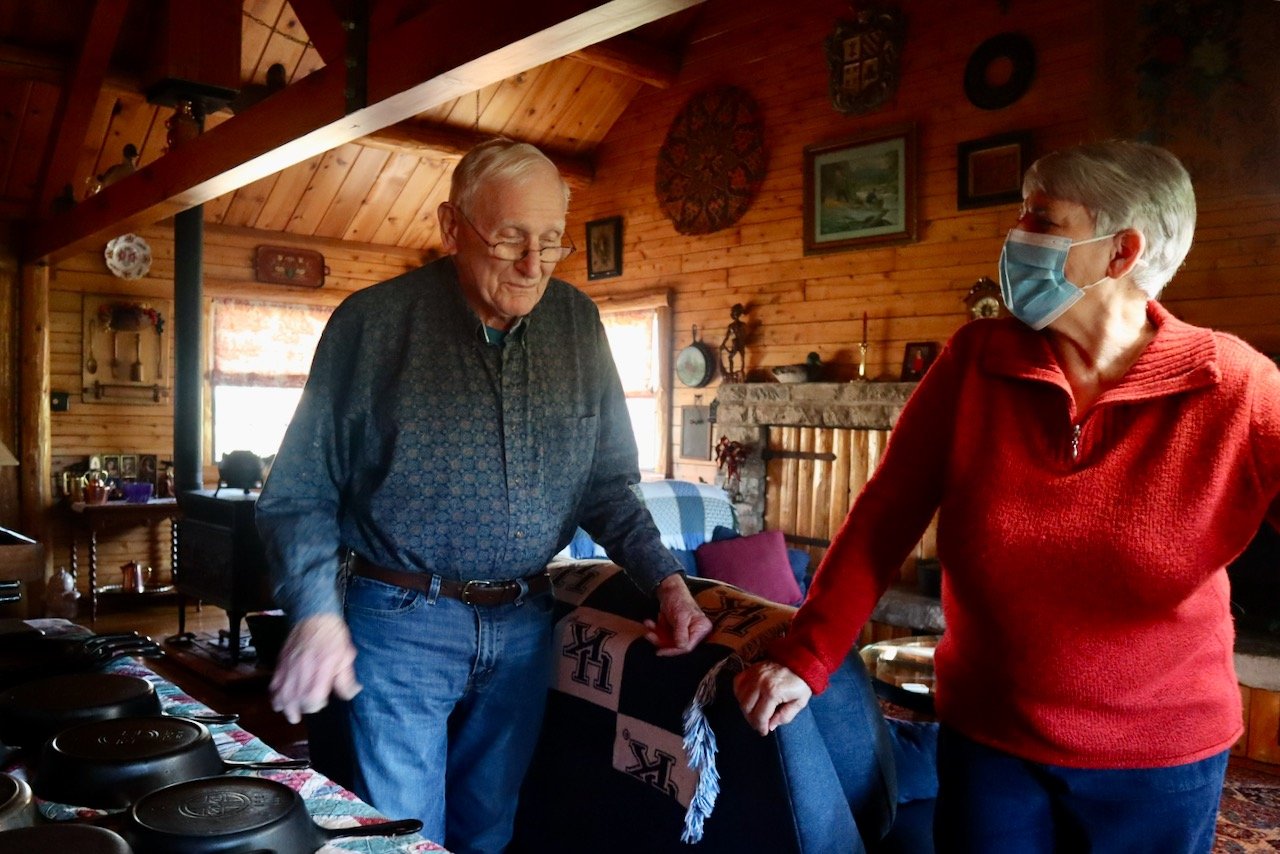
A few years ago we wrote about a longtime Holly Hill Inn friend and customer, Jim Nance. Jim was famous far and wide for his incredible battery of cast iron cookware, collected over a lifetime from flea markets, antique stores and thrift shops.
Jim didn’t collect cast iron just to watch it gather dust. Not at all; after careful restoration, each piece was put to work, sold/traded to other collectors, and sometimes – in the case of less than perfect specimens – given to Ouita Michel for use in our Holly Hill kitchens.
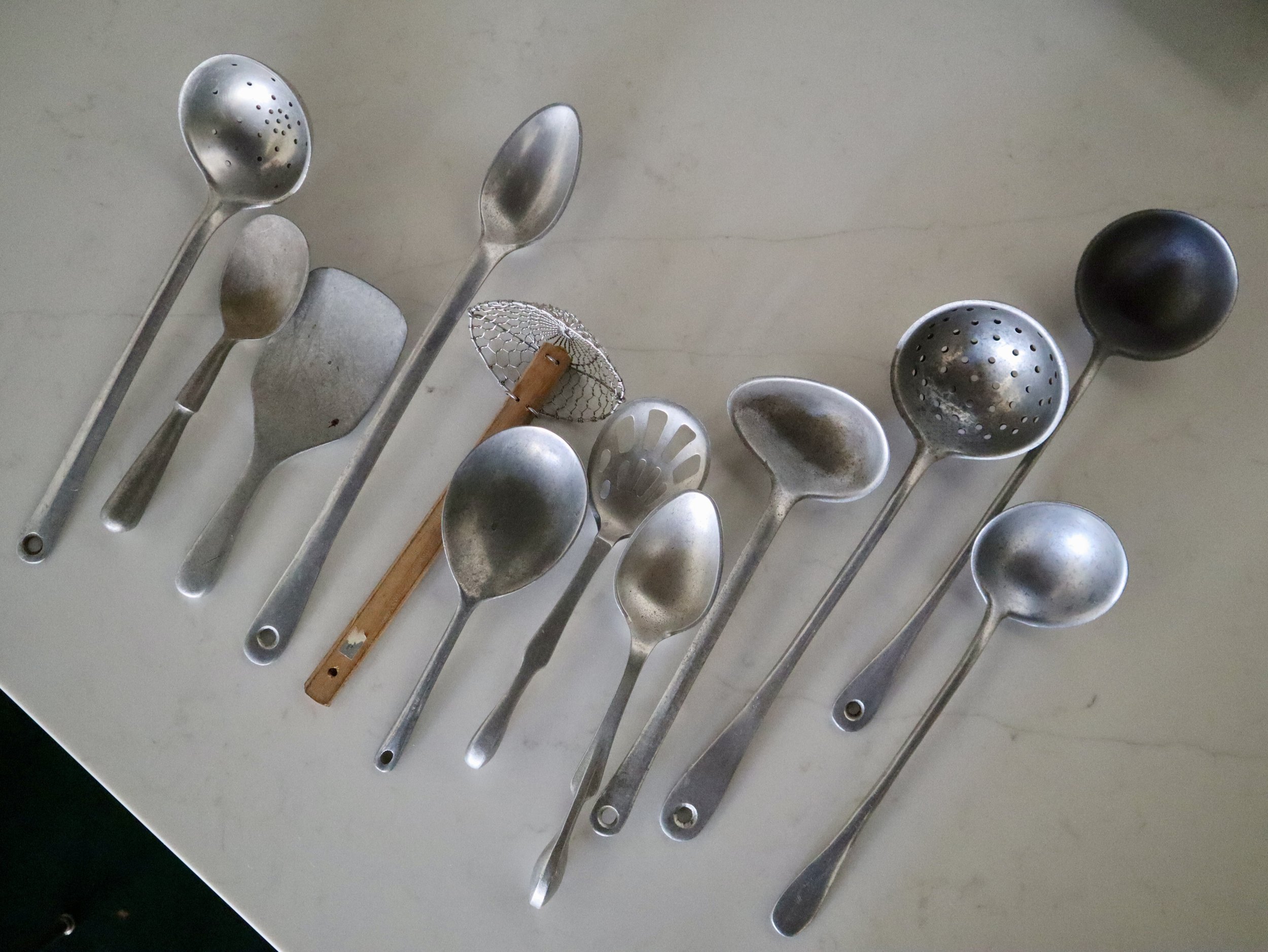
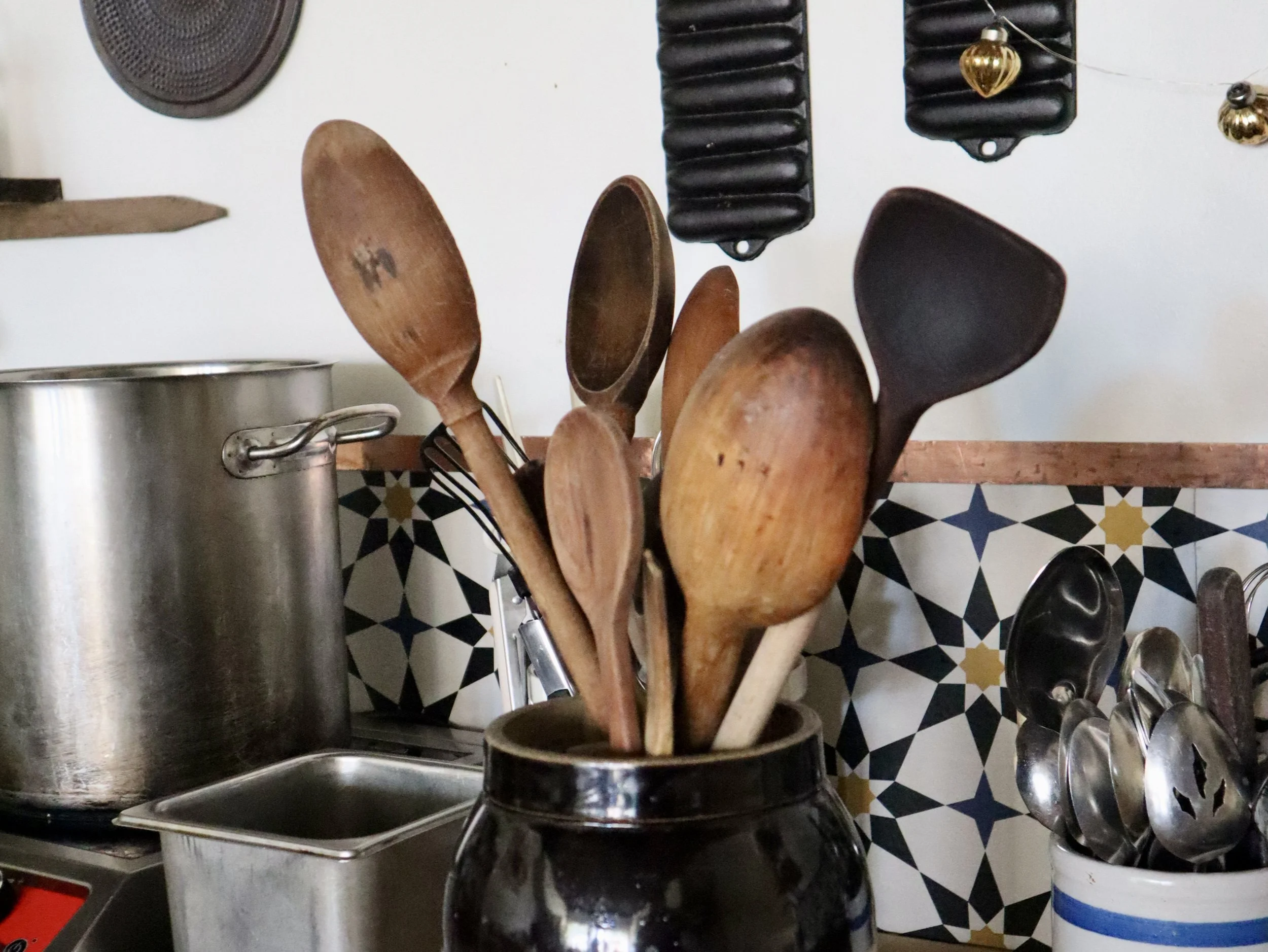
When Jim and his wife Jan, now in their nineties, moved out of their handhewn home into smaller quarters, their daughter presented Ouita with two hefty crocks full of age-darkened wooden spoons and vintage Wagner Ware cast aluminum utensils.
Such treasures put us in mind of other kitchenwares we’ve inherited, thrifted, or rescued from the landfill. An aunt’s big yellow Pyrex bowl, a mother’s old-school drum-shaped dehydrator, Ouita’s mom’s warped stainless steel spatula with a black plastic handle notched from too many brushes with a skillet’s hot rim. Each time we use them, it triggers a tiny reunion with their previous owners, a little link to the spirit world.

Jim, who was an avid outdoorsman, started his cast iron collection after attending an outdoor cooking workshop. He passed those skills on to scout troops, 4-H kids and other youth, alongside his good friend Dick LeMaster. Together they cooked hundreds of meals in Jim’s big kettles, made with garden vegetables that the parents swore would never be touched, only to be proven wrong.
Now we look at Jim’s old aluminum spoons, with hooks on the handles to keep them from falling into a bubbling pot, and wonder how many mouths they fed and how those kids reacted to their first taste of hobo stew, cowboy beans and other exotic (to a ten-year-old) dishes.
When a much-loved young Frankfort musician took his own life a couple years back, friends organized a meal train for his family, several of whom kept to a vegan diet. When it was my turn to cook, I decided to make an African groundnut stew called maafé, which sounded as exotic to me as hobo stew might have to those ten-year-olds.
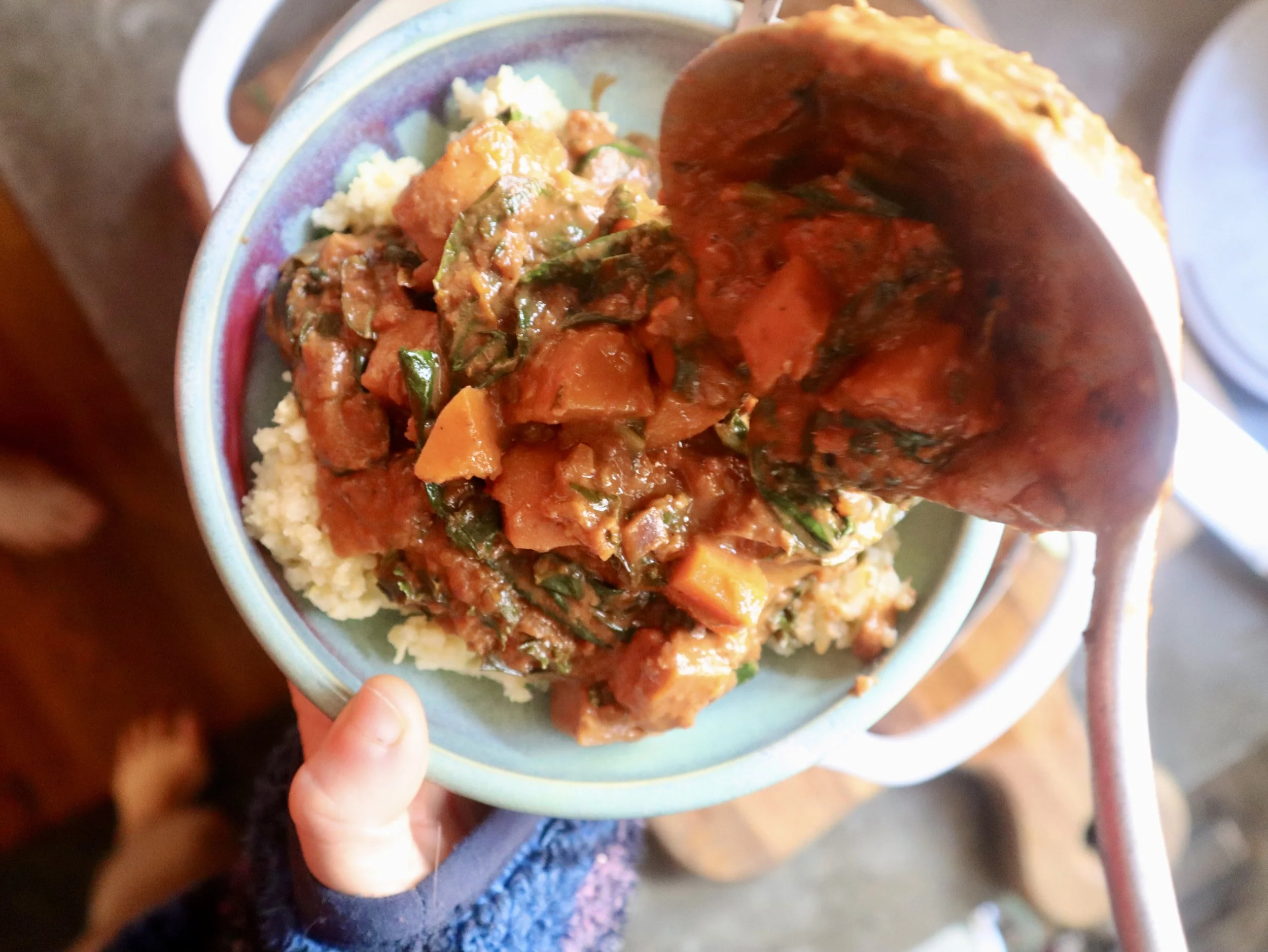
Thought to have originated in West Africa, versions of maafé spread to other parts of the continent in the 1600s as European colonizers arrived and increased cultivation of the peanut, itself a spoil of the Spaniards’ prior colonization of South America. Having traveled from Brazil to Europe to Africa, the peanut returned to the Americas in the 1700s with enslaved Africans trafficked through the Middle Passage.
Born into slavery himself in 1864, George Washington Carver elevated and expanded peanut production in the Southern states, nearly dethroning King Cotton. A lifelong educator and inventor, Carver was devoted to his beloved Tuskegee Institute, turning down numerous offers to relocate.
One of his many innovations was using a horse-drawn wagon to take agricultural education to the area’s poor farmers. Carver’s mobile classroom inspired the creation of the United States cooperative extension service, where Jim’s friend Dick LeMaster served many years as the agent for Fayette County.
Hundred-year-old skillets go from coal ranges to campfires to induction burners. A lowly legume circles the globe and ignites the imagination of a formerly enslaved Black scientist. His wagon-turned- classroom grows into a national program. A pot of West African maafé is stirred by the same ladle that once served hobo stew to Boy Scouts. I’m still mixing up Sunday pancake batter in Aunt Mary’s big bowl and Ouita’s disfigured spatula is always close at hand.
We like to think of these connections as the realm of the kitchen spirits. We can feel them alongside us while we cook, whispering advice, correcting technique, tossing in another pinch of salt when our backs are turned. But it doesn’t faze us; we know we’ll join their ranks one day. And then our recipes and skillets and spoons will become part of someone else’s story.
Related Content
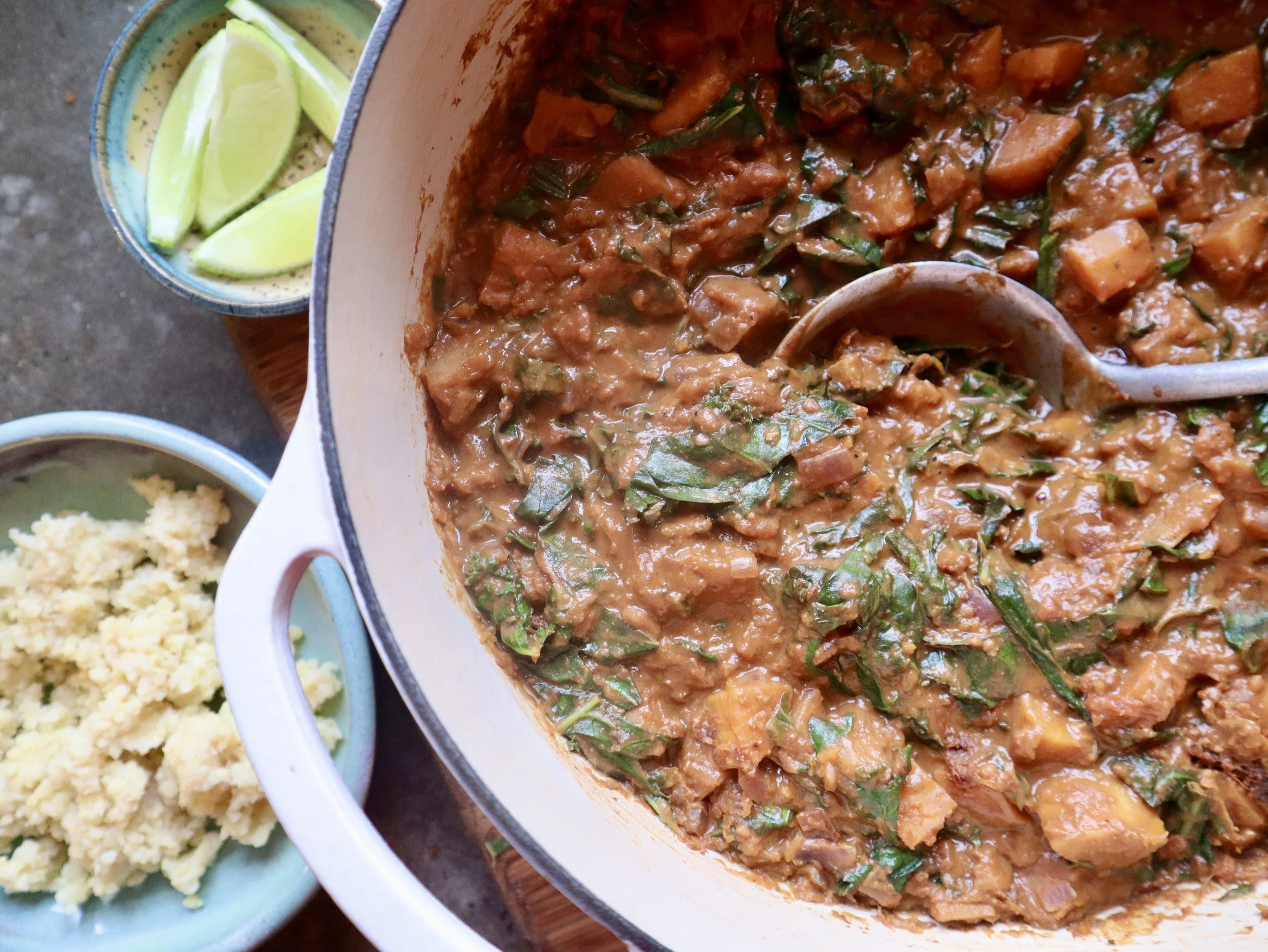
Vegetable Maafe
Winter is the perfect time to put your root vegetables to work in this warming dish from West Africa. It's endlessly variable depending on what's at the farmers market and in your fridge.
© 2026, Holly Hill Inn/Ilex Summit, LLC and its affiliates, All Rights Reserved