
Cultivating the Art of Agriculture (& building beloved community)
by Donna Hecker & photography by Talitha Schroeder
When Wendell Berry passed away, Kentucky lost a man who personified the art of agriculture. He was a poet, essayist, novelist and critic; but he was also a farmer, a steward of the land, and a fierce champion of the power of place. Berry may have lived a rural life but it was not a reclusive one. He was deeply connected to his community; and wrote frequently about “beloved country”, the role of society, and our duty to one another.
Berry once wrote that “works of art participate in our lives; we are not just distant observers of their lives. They are in conversation among themselves and with us.”
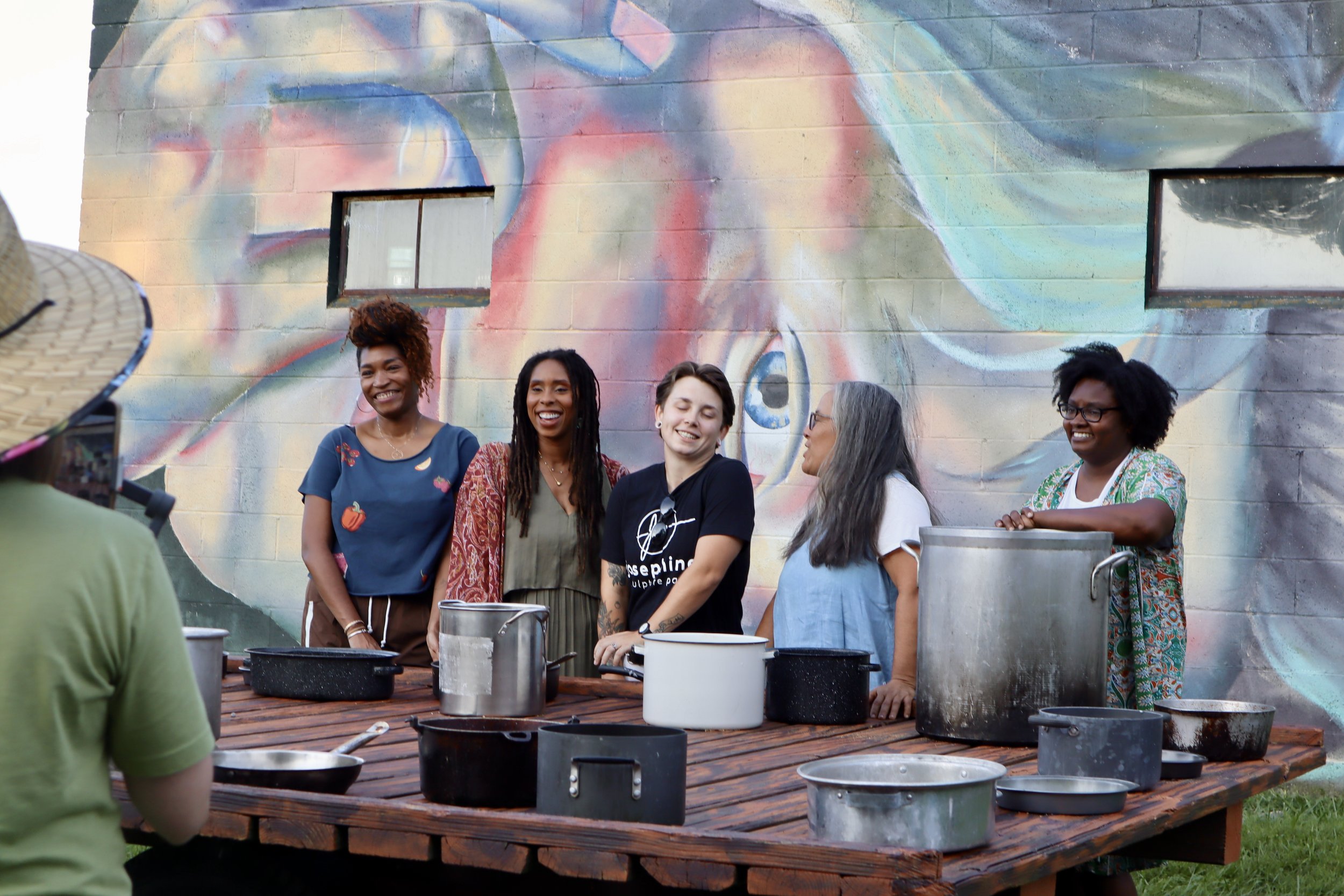
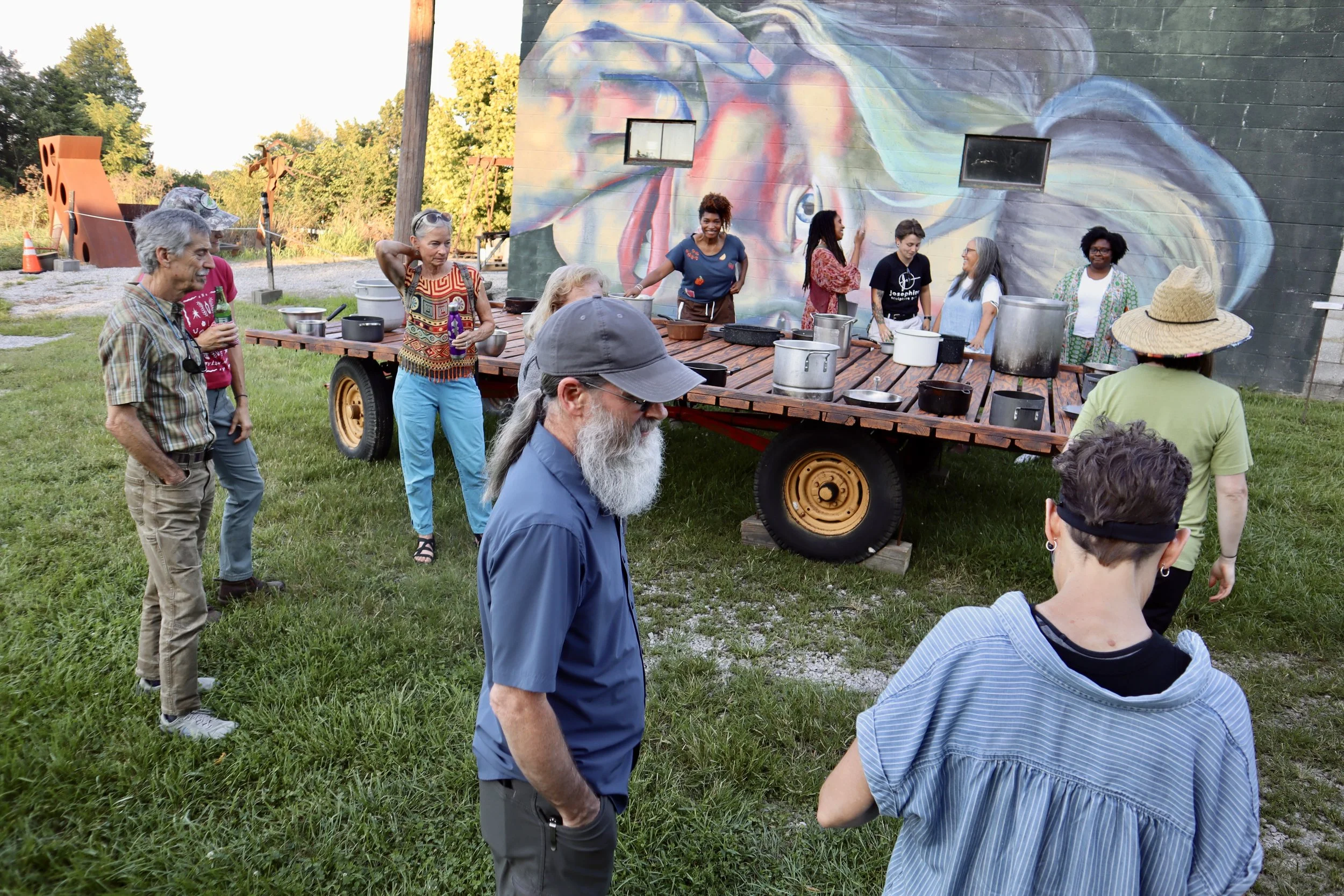
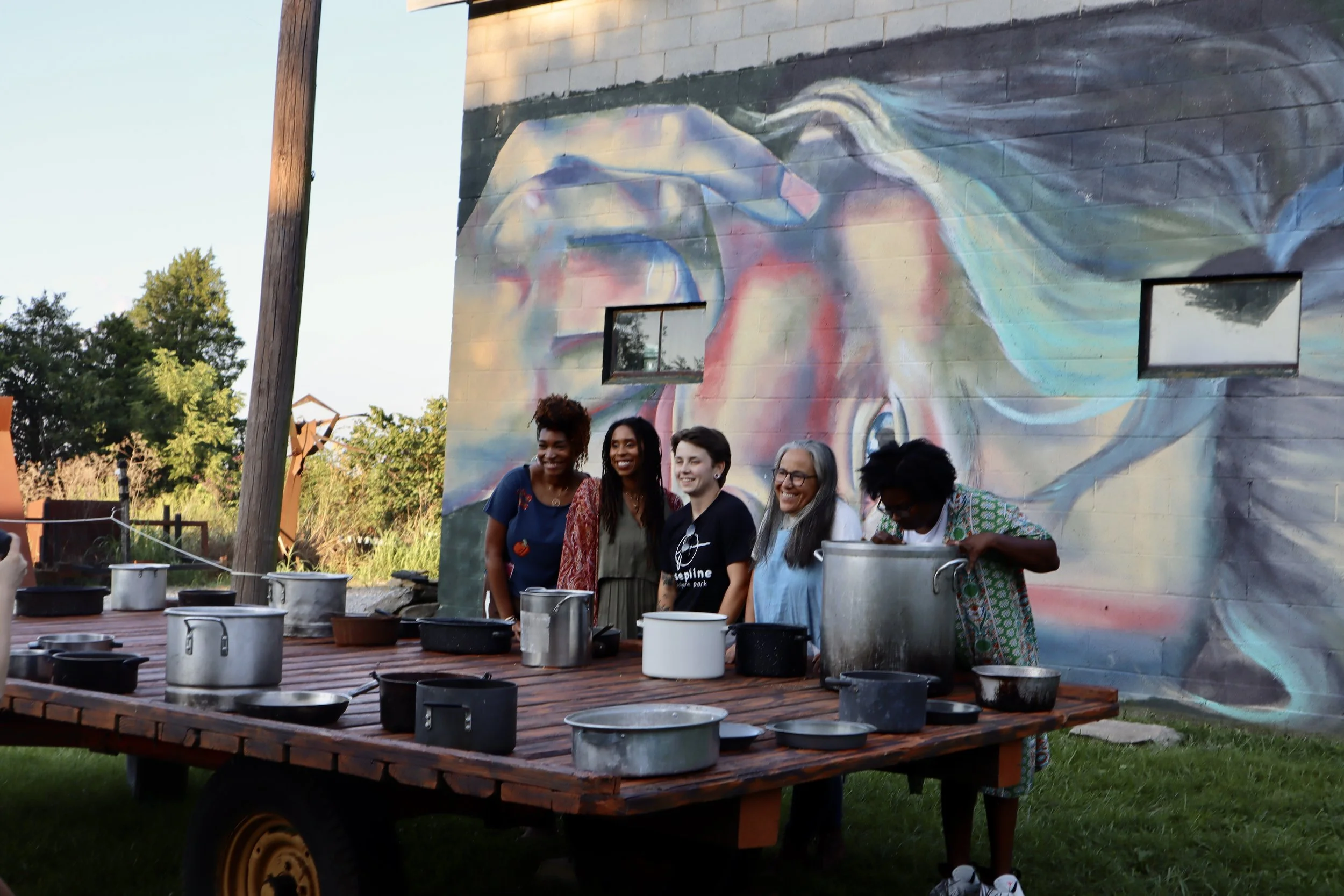
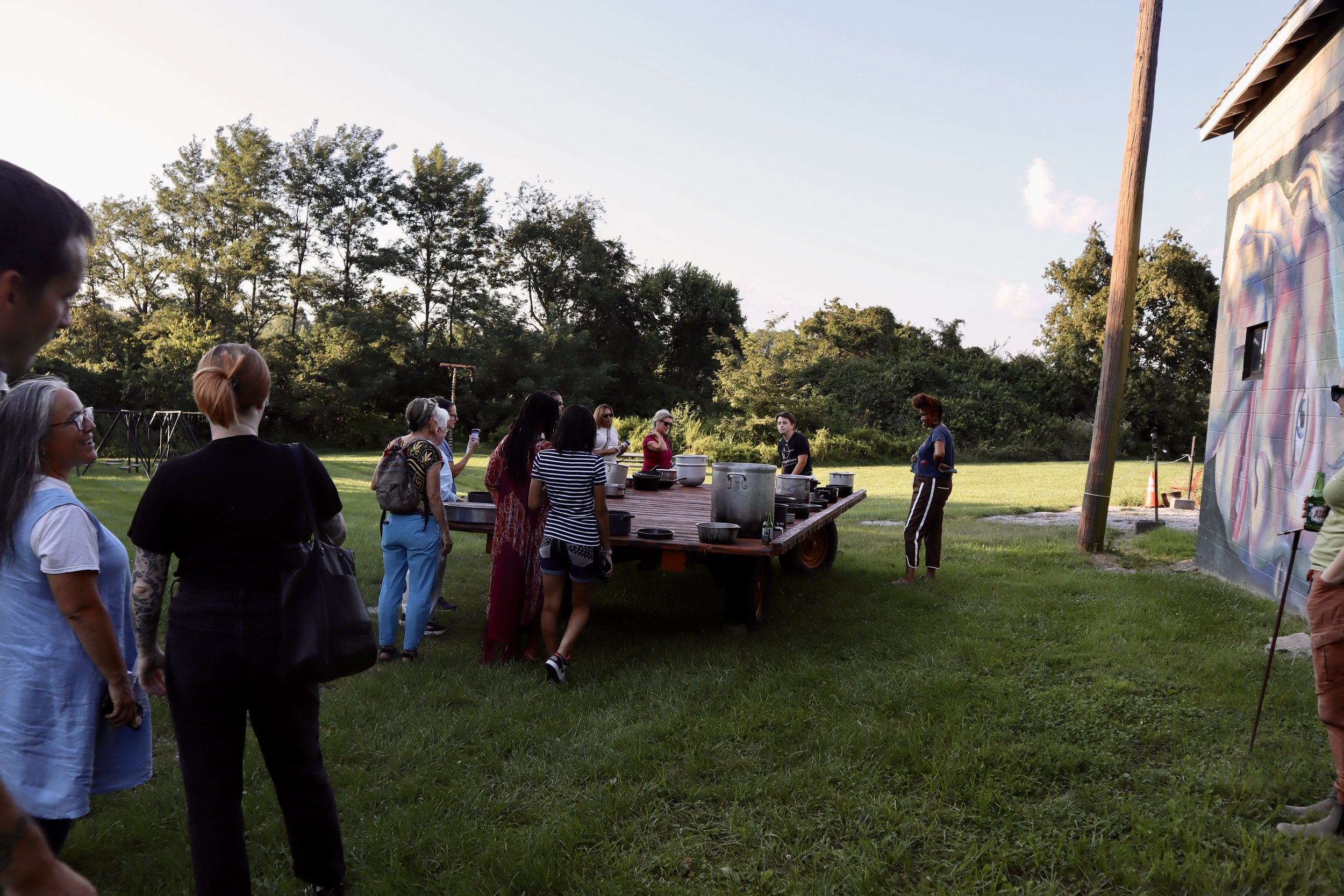
Artist Ceirra Evans recently created a piece for Josephine Sculpture Park called Reunion, on an old flatbed tobacco trailer covered in battered pots and pans. Reunion is an homage to Ceirra’s childhood memories of big family potlucks in Magoffin County, where her mother warned her off of Aunt Gracie’s beans while her Uncle Bobby fried fish for everyone.
We got to know Ceirra when she worked with staff farmer David Wagoner in the gardens at Holly Hill Inn, so we were excited to join her for Reunion’s installation.
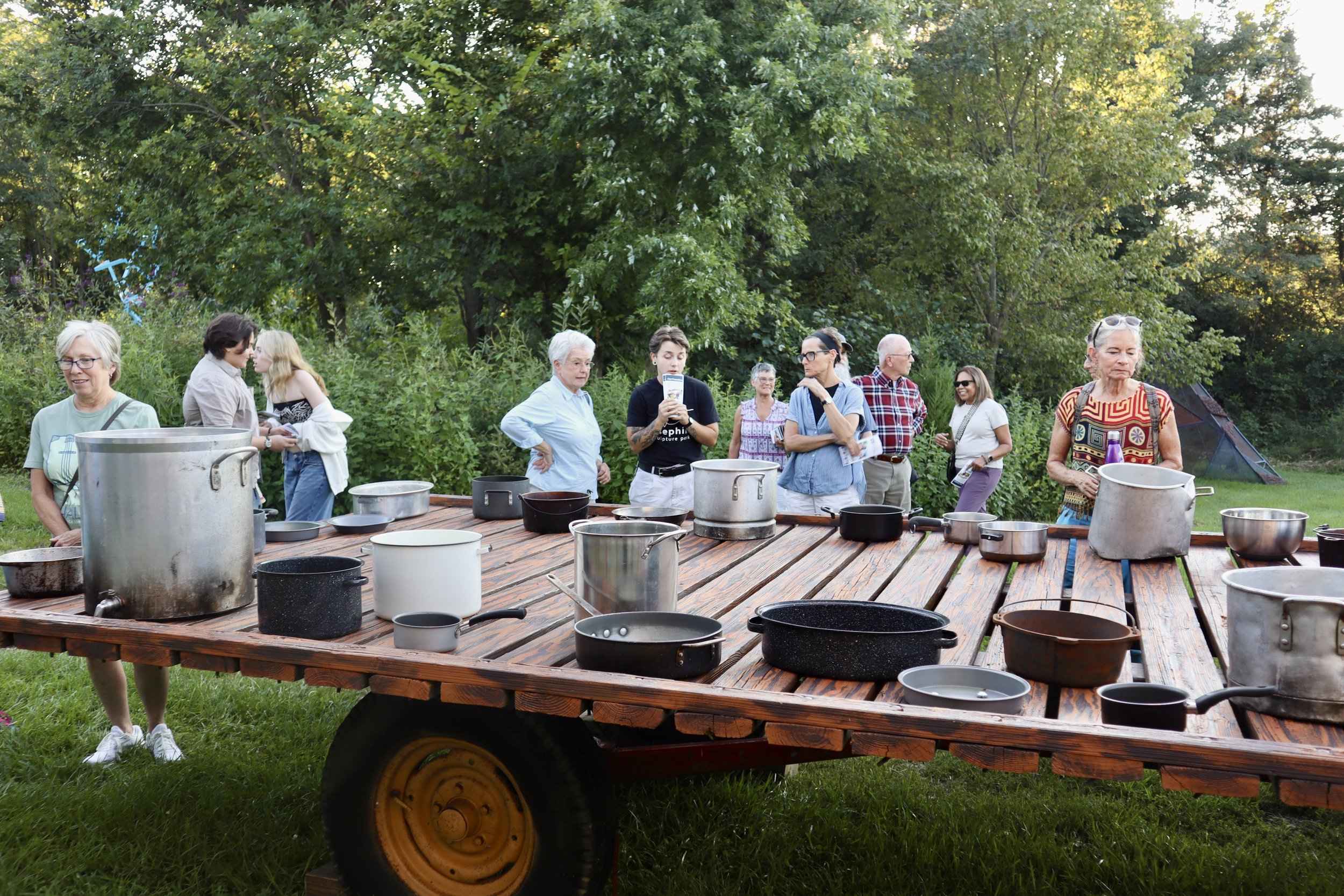
To celebrate the occasion, Ceirra invited several guests to join her in a discussion about food – its cultivation, preparation and associated rituals; its meaning in their lives; and the act of feeding people vs. feeding a community.
LaToya Drake grew up in Western Kentucky and her family reunions took place at the Mother’s Day homecomings at Queen’s Chapel Church in Hiseville, which her great-grandmama once attended. When you're from a small town, you're kin to everybody, and those homecomings mean a lot. Thinking about the complicated history of Kentucky and how lots of Black folks migrated north … that homecoming was a way for them to come back and to see their grannies and have fellowship with folks in the church.
Robin Verson runs a small farm called Hill and Hollow in Edmonton, Ky. She talked about the enduring ritual of the harvest. (There are) many stories in Kentucky about the tobacco harvest, but it's (also) coming together to butcher a hog at the end of the year, right? It's the corn harvest. It's all of these different harvests … It's the beauty of coming together to get all the food put up. The old canning parties where people would come together and preserve the food.
For Mariel Gardner, who left a comfortable corporate job to run Louisville’s West End Women’s Collaborative, a favorite ritual takes place in the weekly food line. It's the community that we've built there. All of us are gathering in the same place with our reusable bags or our boxes and we're sitting there lying and signifying. We're gossiping about what's happening in the city. We're talking about, "Well, where is Miss Shirley? She ain't been here a couple weeks. Did anybody check on her?" So our rituals around food, whether they're in the food line or you're harvesting are exactly the same everywhere you go.
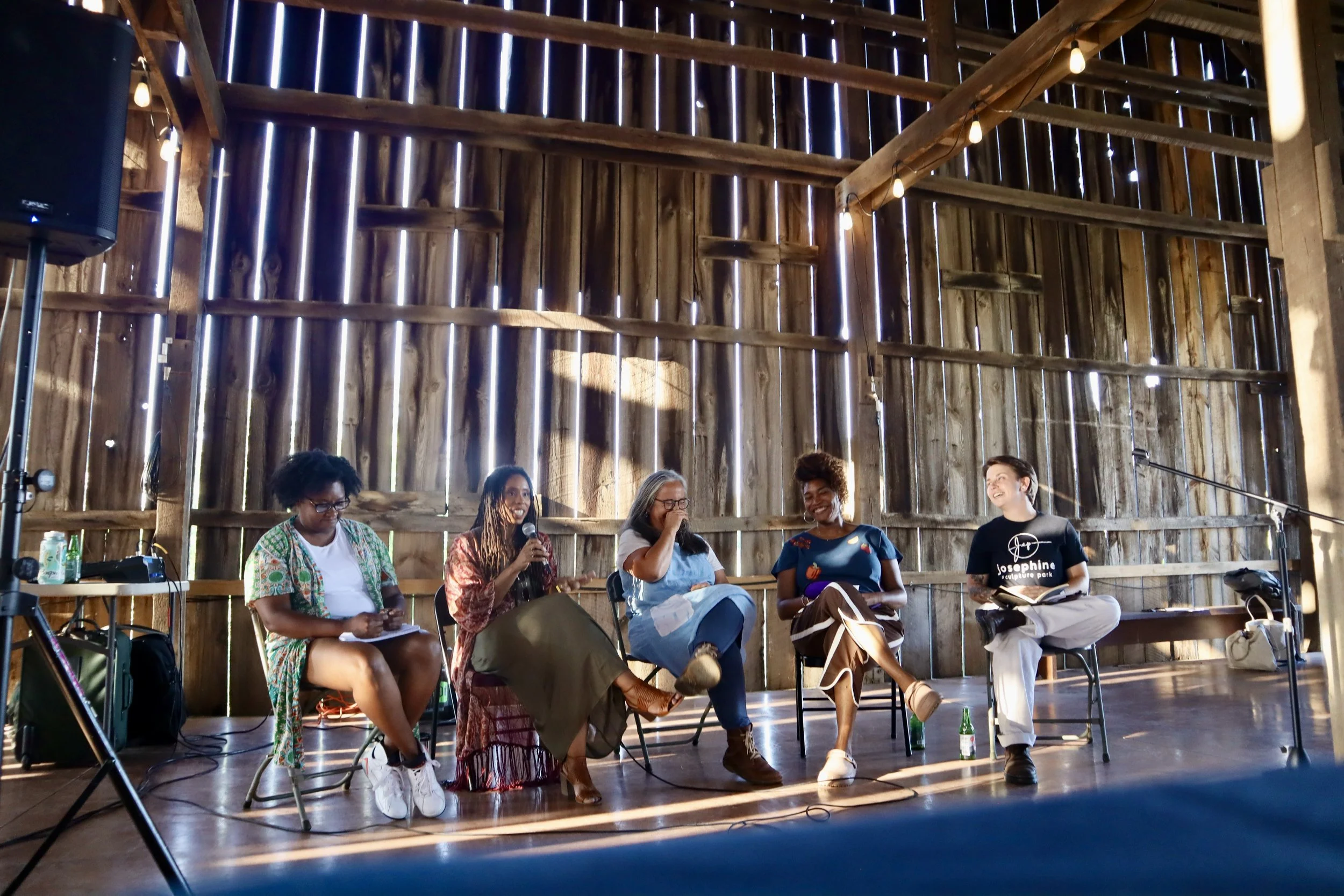
And Angel Ballew talked about nourishment. Her Georgia grandmother had a large family and kept a garden, including herbs, so herbs were one of the first things Angel started growing. Just like I used to with her, before I do any kind of food preparation I'll go get my herbs for the meal. Those times growing up where we would all gather around big meals and bring different dishes, we always left feeling abundant. Gathering around food is more than physical nourishment. It's a nourishment that's born out of connectivity.
There was a lot of back and forth about what policy-makers like to call “food access.” LaToya works with The Food Connection at the University of Kentucky now but before that, she taught folks how to make the most of their SNAP purchases until funding for SNAP-Ed was eliminated.
Mom raised me on limited resources and she was so resourceful (that) I never went without a hot supper, but sometimes at the end of the month lunch might look like Vienna sausages and crackers. And I think about those memories and that's how I approached the work I did. SNAP-Ed employed folks who were peer teachers. And I think that's important when you think about community and building resources … You should not build resources for them, you should build resources with them. And that makes me really sad thinking about the loss of their insights.
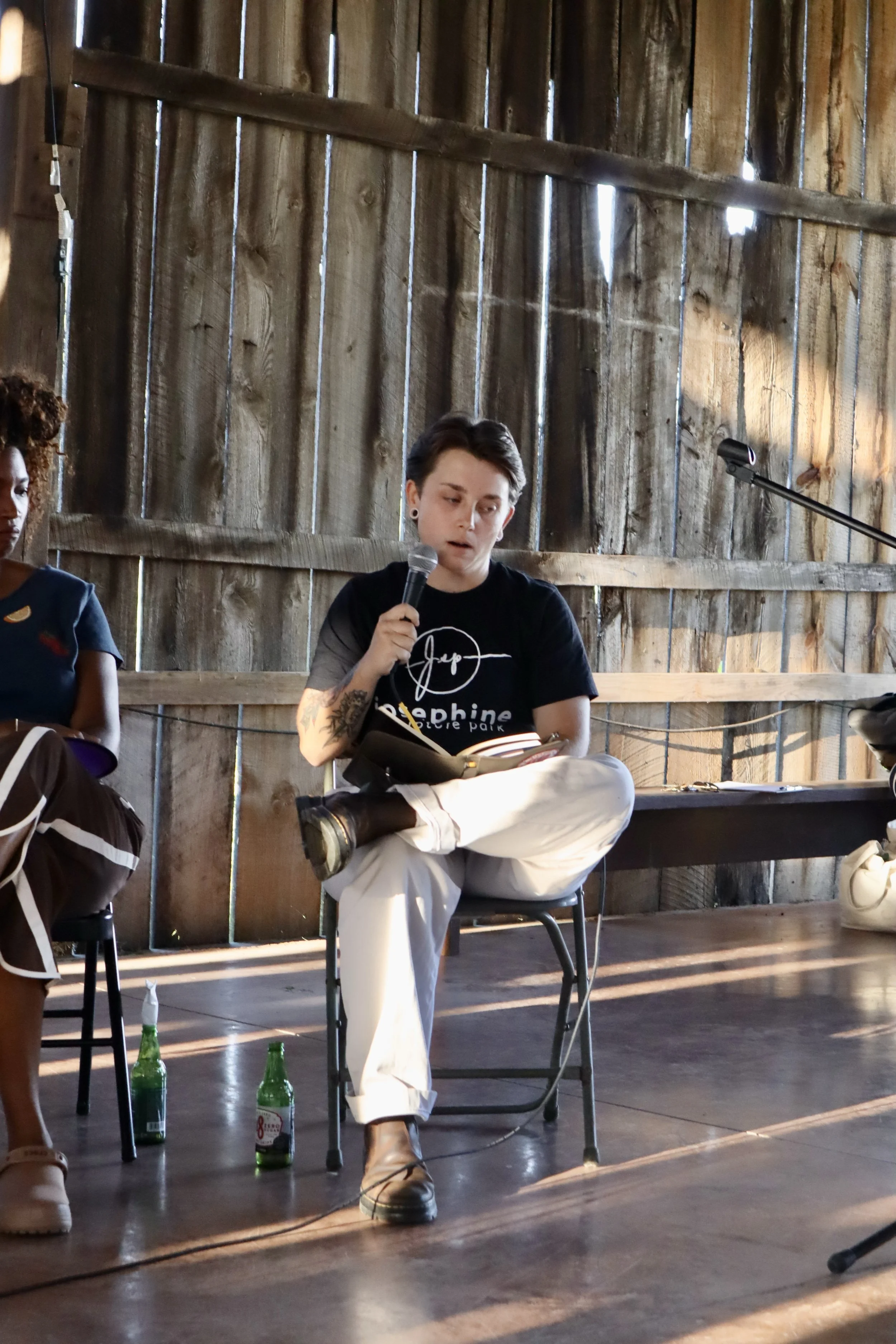
Robin sells her organic produce to customers in Nashville. Meanwhile, there’s no grocery in Metcalfe County where she lives and farms, and her own neighbors can’t afford to buy from her. She readily acknowledges the conundrum.
As a farmer on a small family farm, I am raising this CSA, which is definitely not affordable to my community. And so I'm driving it to Nashville 'cause that's where people can afford to pay for this sort of niche-y product, which is my livelihood.
Just about every Saturday when I come home from the market, I drive around the neighborhood and give my food to my neighbors because I have it, and I know they can't afford it, and I know they want fresh produce. It's very complicated. I don’t know how to manage that other than selling it in a place where people can afford to buy it and then giving it away at home. It just doesn't seem like a very sustainable situation
Ceirra wrapped up the discussion with a question about building community and connection.
Being in the community means being at the table but it doesn't mean just having a seat at the table. Sometimes they don't even have a place to sit. What do we have to protect? What do we have to rebuild? What do we have to create? What, what in your wildest dreams do we have to do to really honor that belonging when it comes to having a place here in Kentucky even?
LaToya answered first. Excuse my language but f–k that table. I say we build a new table that has sturdier legs, 'cause the legs are falling from underneath, and the top is all broken, and it's not a good table. So I say build those new tables. We find who we can build those tables with, and we go where we're wanted.
She was followed by Mariel. We have to connect ourselves back to the land, and I am a city girl through and through. I'm a seventh generation Kentuckian, that I know of – my great-grandparents and everyone after that, they were agrarians. They were people of the land, forced labor or not. They brought us here because of our agricultural knowledge. And while I don't have this beautiful (rural) view, that's cool with me. I love the place that I live. I love the concrete of Louisville. I love the skyscrapers of Louisville. It is my land the way it is. I love the West End. Some people might think seeing dilapidated houses is not beautiful. It's beautiful because it's mine. That's what we try to do at the collaborative – connecting people back to their place.
Building a new table for beloved community. Connection to the land. Art participating in our lives. Being in conversation with it. We can’t think of a more meaningful way to honor the memory of Wendell Berry than to listen in on conversations like the one Ceirra, Angel, LaToya, Robin and Mariel had at Josephine Sculpture Park, on land that was once farmed, around a artwork named Reunion.
Related Content
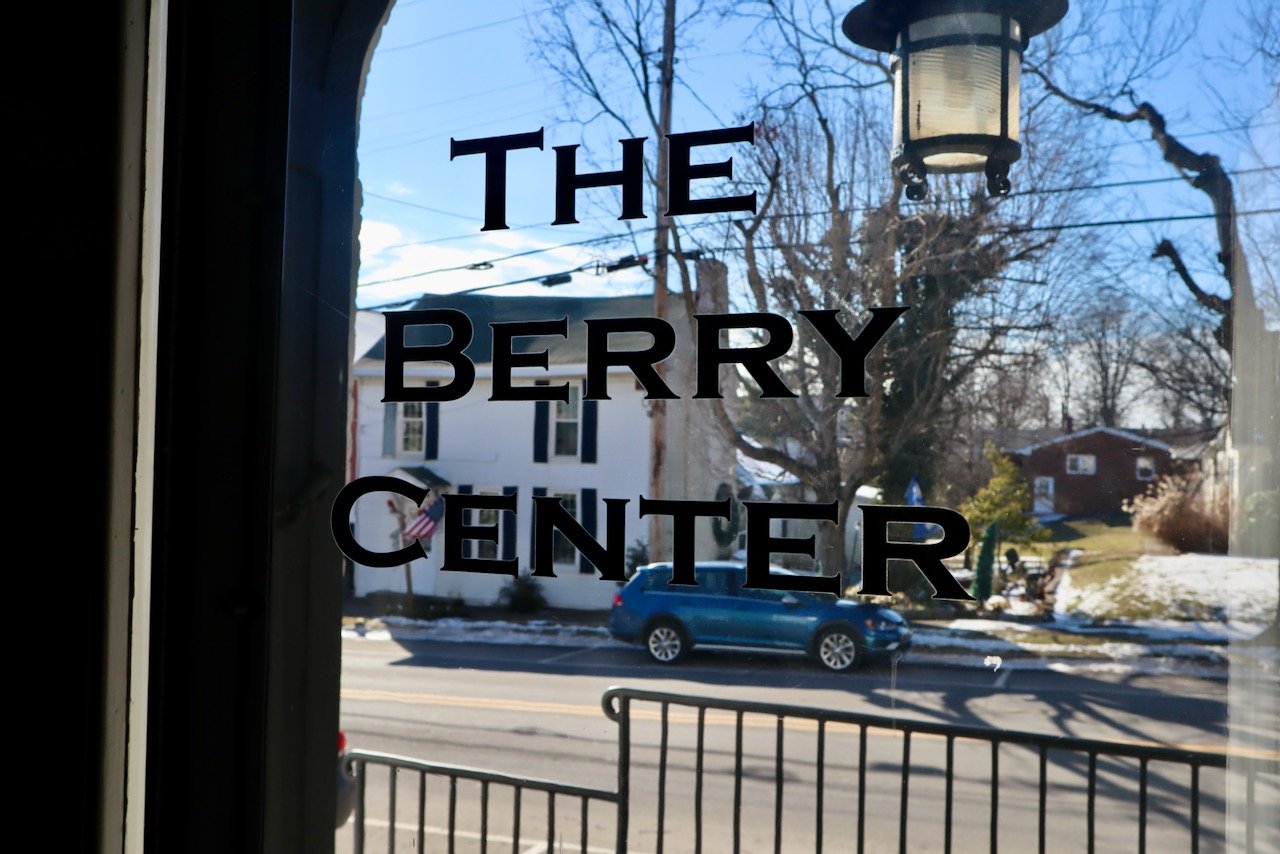
Homecoming: The Berry Center and Our Home Place Meat
Wendell Berry said “it all turns on affection.” For people, creatures, place and planet. Learn how The Berry Center and Our Home Place Meat bring to life this timeless advice from Kentucky’s leading philosopher, poet, and protector of our land.
© 2026, Holly Hill Inn/Ilex Summit, LLC and its affiliates, All Rights Reserved